
Counter-Strike has maintained a loyal community for decades, with many players staying involved since the early CS:GO era. Transitioning to CS2 brought major structural shifts to the virtual item economy. Understanding these changes is essential for collectors, traders, and casual players looking to navigate the modern market safely and effectively.
Below is an overview of the key mechanical shifts in CS2, practical trading strategies for the current market, and specific cosmetic skins worth watching.
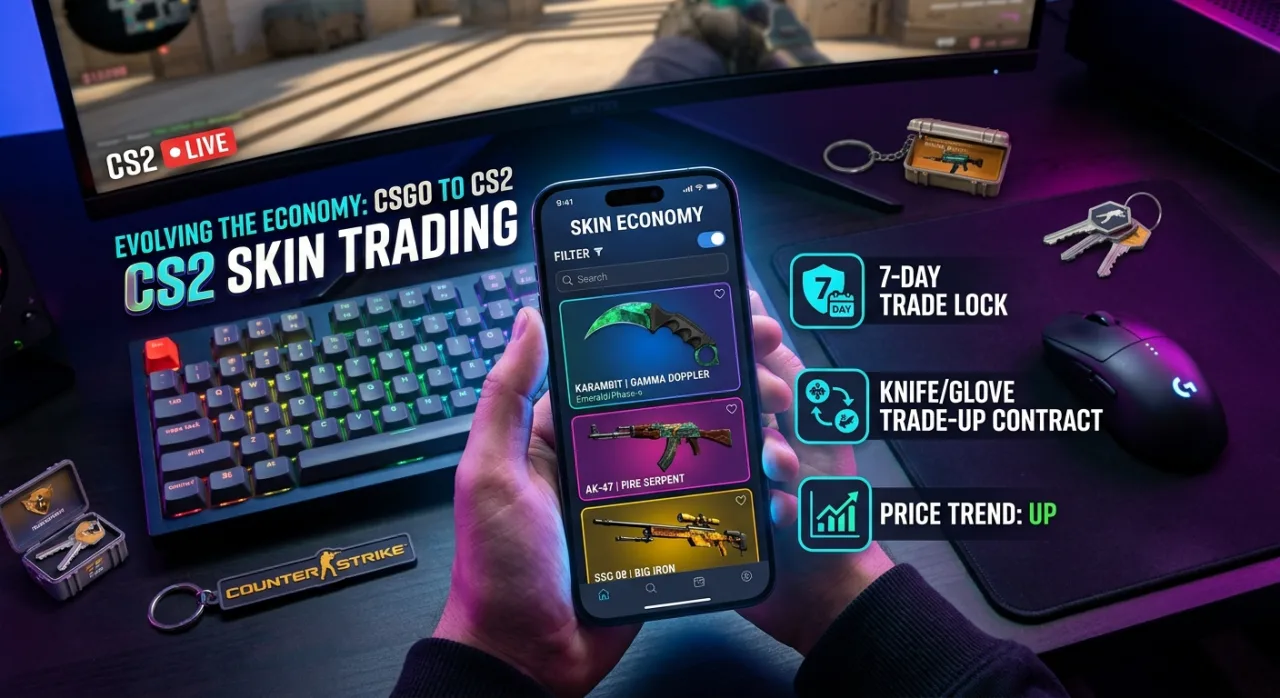
Key Mechanical Shifts: CS:GO vs. CS2
Before adjusting your trading tactics, it is important to examine the primary mechanical updates that separate CS2 from CS:GO. Three core developments directly dictate how modern skin economies operate.
| Feature / System | Traditional CS:GO Era | Modern CS2 Era | Market Impact |
| Trade Lock Rules | Long escrow holds before items arrived in inventory; allowed rapid same-day flips once received. | Immediate delivery with a strict 7-day trade lock; sender trade reversals trigger a 30-day account penalty. | Eliminated same-day flipping; shifted marketplace payout structures to weekly schedules. |
| Knife & Glove Sourcing | Exclusively obtained through opening cases. | Sourced via cases or generated by combining 5 Covert skins in Trade-Up Contracts. | Sharply reduced base knife/glove prices while driving up demand for high-tier Covert (Red) skins. |
| Supply Dynamics | High-tier item supply strictly dwindled over time as cases were opened and items locked. | High-tier item supply can expand via trade-ups, though exact float values and rare patterns remain limited. | Base high-tier items stabilized at lower prices, while rare pattern templates and low floats retained peak value. |
1. New Trade Protection Rules
Traded CS2 items land in your inventory immediately, but they remain locked for seven days. During this window, you can equip the skin in matches, but you cannot trade it, list it on a marketplace, or apply stickers. While a sender can technically reverse a trade during this period, doing so penalizes their account with an immediate 30-day market and trade cooldown. This system eliminated rapid same-day flips, prompting third-party marketplaces to hold seller payouts for a full week.
2. Knife and Glove Trade-Up Contracts
For over a decade, opening cases was the only way to acquire a new knife or pair of gloves. Valve changed this paradigm by allowing players to combine five Covert (Red) skins from the same collection into high-tier knives or gloves.
The market adjusted instantly: standard knife and glove prices dropped, while high-tier Red skins eligible for these recipes saw a surge in demand. StatTrak mechanics also follow distinct rules under this system. Because StatTrak gloves do not exist in the game files, any StatTrak-eligible trade-up contract guarantees a knife output.
3. Evolving Supply and Valuation Models
The old rule that high-end skin supply only decreases over time is no longer accurate. Because knives can be crafted through trade-ups, overall circulating numbers can expand. However, trade-ups cannot target a specific pattern template, Doppler phase, or precise float value. As a result, exceptionally rare pattern combinations hold their premium value, while baseline Covert skins from discontinued collections continue to appreciate due to their consumption in trade-up recipes.
Effective CS2 Skin Trading Strategies
Navigating the current CS2 marketplace requires a clear methodology based on market liquidity, price trends, and demand cycles.
-
Buy Before the Hype: Cosmetic prices follow game updates and esports events closely. A new case drop, a Major championship, or a major balance patch can quickly drive up item values. Accumulate target items early and liquidate during peak community demand. For example, skins from collections that recently left the active drop pool appreciate steadily over subsequent months. Tracking patch notes and tournament schedules helps you enter positions before social media hype inflates prices.
-
Leverage Analytics and Tools: Rely on historical price charts to verify whether an item is stabilizing, declining, or forming a temporary price bubble. Float value checkers and inspection tools reveal clean weapon copies that justify higher prices over base listings. Furthermore, comparing cross-platform price aggregators helps identify price gaps across marketplaces.
-
Structure Trades Around the 7-Day Lock: Because traded assets remain locked for a week preventing immediate resale or use in trade-ups your purchasing strategy must adjust. Buying an item with the goal of selling it the next morning is no longer viable. Focus on items you are comfortable holding for at least seven days, and maintain a diversified inventory with unlocked assets so you can respond quickly to sudden market shifts.
Notable CS2 Skins Worth Watching
Certain weapon finishes retain strong demand due to their design history, rarity, or aesthetic appeal. Here are three notable examples:
SSG 08 | Big Iron
-
Rarity: Classified
-
Collection: Shadow Case (September 2015)
-
Design: Hydrographic yellow-and-orange paint with a weathered metallic finish.
Introduced via the Steam Workshop, the Big Iron remains an affordable Classified sniper rifle. Because the Shadow Case no longer belongs to the active weekly drop pool, this skin offers strong aesthetic value alongside steady long-term potential.
Five-SeveN | Angry Mob
-
Rarity: Covert
-
Collection: Prisma Case (“Seeing the Light” Update)
-
Design: Vibrant orange and blue street-art graphic by community artist SHPR.
Featuring the subtle in-game flavor text “Inside voices, please,” the Angry Mob stands out in any sidearm loadout. As a Covert-tier pistol, it provides premium visual appeal at a accessible mid-range price point.
MAC-10 | Neon Rider
-
Rarity: Covert
-
Collection: Chroma 2 Case
-
Design: Retro-futuristic cyberpunk aesthetic featuring hot pink, cyan, and electric blue hues.
The Neon Rider is a classic Covert skin with a strong retro aesthetic. While it commands a higher price than lower-tier SMG alternatives, its historical popularity and status make it a staple item for collectors and active players alike.
Leave a Reply