
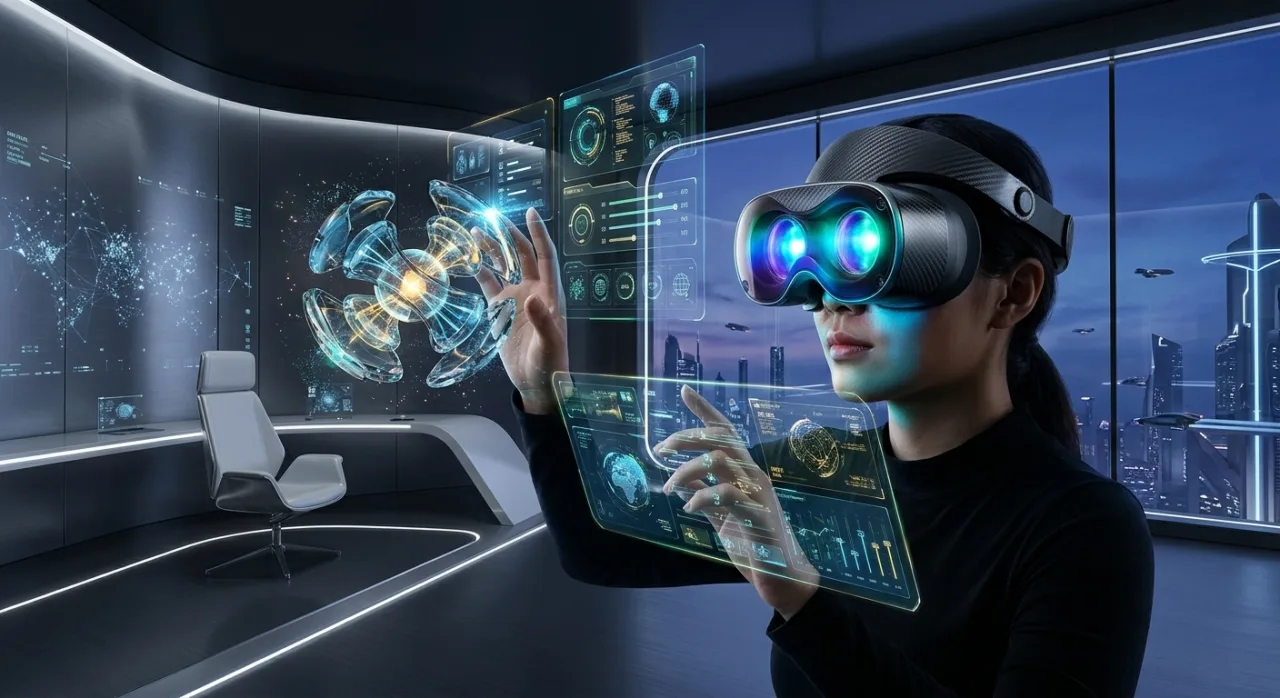
 Virtual reality gaming is no longer waiting for a breakthrough; it is actually living through a correction. The early promise was simple and seductive: put on a headset, disappear into another world, and play in a way flat screens could never match. The reality has been messier. Hardware improved faster than software in some years, then content momentum outran comfort advances in others. Yet by late 2026, the conversation has matured. The question is not whether VR gaming matters. The better question is what kind of VR gaming has a durable future, and which headsets are built for that future rather than just for a spec sheet.
That shift matters because the market now has clearer winners, clearer trade-offs, and clearer user groups. Standalone devices have become the mainstream entry point. PC VR remains the premium route for simulation players and graphics purists. Console VR still has a role, but it is more dependent on platform strategy than many expected. Coverage from TechTimes’ 2026 headset roundup and MSN’s guide to the best VR headsets in 2026 reflects that broader reality: consumers are no longer shopping for VR in the abstract. They are comparing ecosystems, passthrough quality, tracking reliability, display clarity, comfort, and software libraries.
I think that is healthy. A category becomes serious when buyers stop being dazzled by the concept and start asking operational questions. What is the total cost? How long can I wear it? Does it support the games I actually play? Will developers keep shipping for it? Those are not cynical questions. They are the questions that decide whether virtual reality becomes a stable part of gaming culture or stays a periodic curiosity. For readers who want a broader companion piece, WriteUpCafe has also explored these themes in Virtual Reality Gaming: The Future and Best Headsets to Watch and Expert Tips for the Future of Virtual Reality Gaming and Best Headsets.
VR gaming’s future will be decided less by headline demos and more by repeat use: comfort, convenience, software cadence, and whether players come back three nights a week.
How VR gaming got here: from novelty cycles to ecosystem competition
The current moment makes more sense when seen as the result of three overlapping eras. First came the modern revival phase, when Oculus, HTC, and Sony convinced players that consumer VR could be technically viable. The second era was the expansion phase, when standalone hardware lowered friction and made VR less dependent on expensive gaming PCs. The third, which we are in now, is the ecosystem phase. Headsets are no longer competing only on screens and sensors. They are competing on stores, developer support, mixed reality features, subscription logic, and retention.
The industry learned some expensive lessons. One was that raw immersion does not automatically create long play sessions. Motion sickness, heat, facial pressure, battery anxiety, and setup friction all reduce repeat engagement. Another was that many players admire VR more often than they use it. A headset can impress a first-time guest and still fail as a weekly gaming device. That gap between demo value and habit value shaped product strategy across the sector.
Developers learned their own lesson as well: porting a conventional game into VR is rarely enough. The strongest VR titles tend to be designed around presence, hand interaction, spatial awareness, and room-scale or seated comfort from the start. Rhythm games, cockpit simulations, physics sandboxes, tactical shooters, and social spaces all found stronger footing than projects that treated VR as a gimmick layer. Conference talks and postmortems across the industry have repeated that point for years, and the software market now reflects it.
There is also a business story underneath the hardware story. Subsidized pricing, platform exclusives, and app-store economics pushed some companies to seek scale first and margin later. Others aimed for premium positioning and enthusiast loyalty. That split is visible in today’s lineup. Some headsets are optimized to bring the broadest possible audience into the funnel. Others are designed for users who already know why they want pancake lenses, eye tracking, local dimming, or tethered PC rendering.
- Revival phase: proof that room-scale and tracked controllers could work for consumers.
- Expansion phase: standalone headsets reduced setup friction and widened the audience.
- Ecosystem phase: content libraries, mixed reality, and daily usability now define competitive advantage.
That is why the future of VR gaming cannot be judged by hardware alone. The category has matured into a systems contest.
What actually matters in a headset now
Consumers still get flooded with specs, but only a handful of factors consistently shape real-world satisfaction. Resolution matters, yes, but lens quality and optical clarity can matter just as much. A headset with strong edge-to-edge clarity often feels more advanced than one that merely posts a higher pixel count. Tracking quality remains foundational because poor tracking breaks trust instantly. Comfort is not a luxury metric either; it is a retention metric. If a headset leaves marks, strains the neck, or traps heat after 30 minutes, software quality will not save it.
Passthrough has become one of the most consequential developments in the category. High-quality color passthrough does two things at once: it improves safety and convenience, and it opens mixed reality gaming that blends digital objects with the room around you. That reduces isolation, lowers friction, and creates new design opportunities. It also changes buying logic. A buyer choosing between two similarly priced devices may now ask not only which headset is better for VR, but which one is better for both VR and mixed reality.
Then there is the ecosystem question. A headset with a broad store, steady updates, active multiplayer communities, and strong developer support usually ages better than a technically impressive device with weaker software momentum. Accessories also matter more than many buyers expect: prescription inserts, better straps, charging docks, external batteries, and PC link options can dramatically change the ownership experience.
Based on recurring priorities seen in 2026 buyer guides from TechTimes and MSN, these are the categories that matter most:
- Comfort and weight balance: determines whether the headset gets used often or sits in a drawer.
- Display and lens quality: affects text readability, immersion, and eye fatigue.
- Tracking and controllers: critical for shooters, rhythm games, and precise hand interaction.
- Software ecosystem: library depth, exclusives, updates, and social features.
- Passthrough and mixed reality: increasingly important for versatility and convenience.
- PC connectivity: essential for sim racers, flight sim fans, and graphics-focused players.
- Price-to-value ratio: still the biggest adoption lever for mainstream users.
Actually, this is where many best-headset rankings become too simplistic. There is no universal best headset. There is a best headset for a first-time standalone buyer, a best one for serious PC VR, a best one for console owners, and a best one for buyers who care about mixed reality as much as gaming. The useful analysis starts when we stop pretending those are the same customer.
The strongest headset in 2026 is not the one with the longest spec sheet. It is the one whose compromises best match the player’s habits, budget, and platform loyalty.
The leading headset categories in 2026
By late 2026, the market can be read through four practical lanes. The first is mainstream standalone VR, led by devices that minimize setup and maximize software access. The second is premium mixed-reality-first hardware, where passthrough quality and productivity ambitions sit alongside gaming. The third is enthusiast PC VR, where image fidelity and simulation depth still justify cables or more complex setups. The fourth is console VR, which remains narrower but can deliver polished exclusives and easier optimization.
Mainstream standalone remains the growth engine because convenience wins. Buyers want fast setup, wireless freedom, and a store with recognizable titles. This is why devices frequently highlighted by TechTimes and MSN continue to dominate recommendation lists: they lower the barrier to entry while still offering enough visual fidelity and controller tracking for most players. For many households, that is the tipping point. A headset that can be shared quickly with friends or moved between rooms has a practical advantage over a technically superior but cumbersome rival.
Premium mixed-reality devices occupy a different logic. They are trying to become spatial computing platforms, not just gaming machines. For pure gamers, that can sound like dilution. But there is a strategic reason behind it. If a headset can justify daily use beyond games, owners are less likely to abandon it between software releases. Gaming then benefits indirectly from higher engagement and stronger ecosystem lock-in.
Enthusiast PC VR still matters more than raw sales numbers suggest because it influences perception. Sim racing, flight simulation, and mod-heavy communities continue to push the ceiling of what VR can do. These players care about latency, clarity, field of view, and compatibility with powerful GPUs. They also generate some of the most detailed feedback in forums, benchmark tests, and hardware reviews.
Console VR has a more constrained path. Its advantage is optimization. Developers know the hardware target, and players get a cleaner plug-and-play experience. Its disadvantage is strategic dependence on one platform holder’s priorities. If first-party support slows, momentum can fade quickly.
- Best for beginners: standalone headsets with strong stores and simple setup.
- Best for premium immersion: mixed-reality-capable devices with better displays and passthrough.
- Best for enthusiasts: PC VR headsets tuned for high-end graphics and simulation.
- Best for console players: platform-specific VR with curated software and simpler optimization.
Readers comparing these lanes may also find useful context in Rethinking Virtual Reality Gaming and the Best Headsets and Virtual Reality Gaming Future and the Best Headsets, which frame the same market from slightly different angles.
What changed recently and why 2026 feels different
The biggest change is that VR is increasingly being evaluated alongside mixed reality rather than apart from it. That is not a branding trick; it is a usage shift. Better passthrough cameras, stronger hand tracking, and more polished room-aware interfaces have made headsets feel less like sealed helmets and more like flexible spatial devices. For gaming, the significance is subtle but real. Mixed reality lowers the intimidation factor. It makes shorter sessions easier. It allows social interruption without fully removing the headset. Those are practical improvements, and practical improvements usually beat futuristic promises.
Another recent change is the clearer segmentation of buyer expectations. In earlier cycles, companies often marketed one headset as if it should satisfy everyone. In 2026, the messaging is more honest. Some products are pitched around affordability and broad access. Others are pitched around display quality, premium optics, or ecosystem integration. That honesty helps consumers make better decisions and reduces disappointment after purchase.
Software curation has improved too. Stores are better at surfacing quality experiences, and developers have become more disciplined about comfort options, locomotion choices, and onboarding. The result is not that every game is excellent. Far from it. But the average level of usability is stronger than in the category’s earlier years. That matters for retention more than blockbuster headlines do.
There is also a quieter infrastructure story. Wireless PC streaming has become more credible for many users with strong home networks. Accessories are better. Prescription lens options are easier to find. Community knowledge around setup, battery management, and fit has improved. These are not glamorous developments, but they reduce friction across the ownership journey.
Actually, that is why 2026 feels different from prior VR comeback moments. The category is not being sustained only by hype cycles or one flagship launch. It is being sustained by a stack of incremental improvements across hardware, software, comfort, and use cases. Those layers add up.
How to choose the best headset for your gaming profile
If you are buying a headset now, the smartest approach is to start with your use case rather than your budget. Budget matters, of course, but it should come after platform fit. A player focused on rhythm games, social titles, and occasional fitness sessions needs a different device from a sim racer with a powerful desktop PC. A PlayStation owner deciding whether to add VR to an existing setup has a different calculation again. The wrong purchase usually happens when buyers chase prestige hardware that does not match their habits.
For first-time users, standalone remains the least risky entry. It offers the shortest path from unboxing to playing, and that convenience increases the odds that the headset becomes part of routine life. For PC enthusiasts, by contrast, the key questions are display sharpness, compression quality when streaming, wired versus wireless tolerance, and compatibility with the software stack they already use. For console players, library depth and first-party commitment should be weighed as heavily as hardware comfort.
Here is a practical framework:
- If you want easy setup and broad appeal, prioritize standalone ecosystems, comfort, and controller tracking.
- If you own a powerful gaming PC, prioritize optics, latency, and reliable PC connectivity over marketing around lifestyle features.
- If you play mostly seated simulators, focus on clarity, long-session comfort, and compatibility with accessories.
- If you share the headset with family or friends, prioritize fast guardian setup, durable controllers, and intuitive menus.
- If you are sensitive to motion sickness, prioritize comfort settings, refresh rate options, and games designed around stable locomotion.
One more point often missed in reviews: total cost of ownership can drift far above sticker price. Extra straps, battery packs, charging solutions, audio upgrades, and prescription inserts can materially change value. A cheaper headset that needs several upgrades may end up costing as much as a more refined one. Consumer guides such as the 2026 lists from TechTimes and MSN are most useful when read with that full-cost mindset, not as simple ranking tables.
My own thesis is straightforward. The best headset is the one that removes enough friction for you to keep using it after the novelty fades. That is the threshold that matters.
Where VR gaming goes next
The future of VR gaming will likely be defined by convergence rather than a single dramatic leap. We should expect better displays, lighter designs, stronger eye and hand tracking, and smarter rendering techniques. But the more important development may be that VR, mixed reality, cloud services, and conventional gaming ecosystems become less separate. A player may discover a game on a console storefront, continue in a headset, and socialize through a cross-platform layer without treating VR as a completely different hobby. That kind of integration is more plausible than the old fantasy that headsets would replace every other screen.
Artificial intelligence will probably influence VR more on the content and interface side than on the hardware side in the near term. Better NPC behavior, adaptive tutorials, procedural spaces, live translation in social environments, and smarter accessibility tools could all improve retention. Yet none of that will matter if comfort stalls. The industry’s next durable win is still ergonomic: lighter front loads, cooler face interfaces, longer battery life, and less visual fatigue.
There is also room for a healthier software economy. Mid-budget VR games, not just prestige exclusives, may become the category’s backbone if development tools continue improving and cross-platform deployment gets easier. That would be a positive sign. Every platform matures when it can support a dependable middle class of software, not only breakout hits.
For players, the takeaway is simple. Do not buy the story that VR gaming’s future depends on one perfect headset. It depends on many good-enough systems becoming easier to use, easier to develop for, and easier to justify week after week. For developers and platform owners, the lesson is stricter: retention beats spectacle. A headset that gets worn regularly is more valuable than one that photographs well at launch events.
VR gaming still carries ambition, and actually it should. But the strongest version of that ambition now looks more grounded. Less techno-messianic. More product disciplined. Better OKRs, better postmortems, better user empathy. That is not a loss of vision. It is how categories become real.
The current hardware landscape offers unprecedented variety, ensuring that whether you seek standalone portability, wireless PC flexibility, deep simulation performance, or rich social mixed reality, today’s devices provide capable options to fit diverse gaming styles.
As manufacturers continue refining lens stacks, thermal management, battery densities, and software optimization, the barriers holding back widespread adoption are steadily eroding. Consumers benefit most by ignoring marketing hype and evaluating devices against their personal routines, spatial environments, and preferred genres. Ultimately, the maturity of virtual reality as an entertainment medium rests on sustainable comfort, engaging software, and seamless daily utility that transforms periodic wonder into enduring habit.
Leave a Reply