
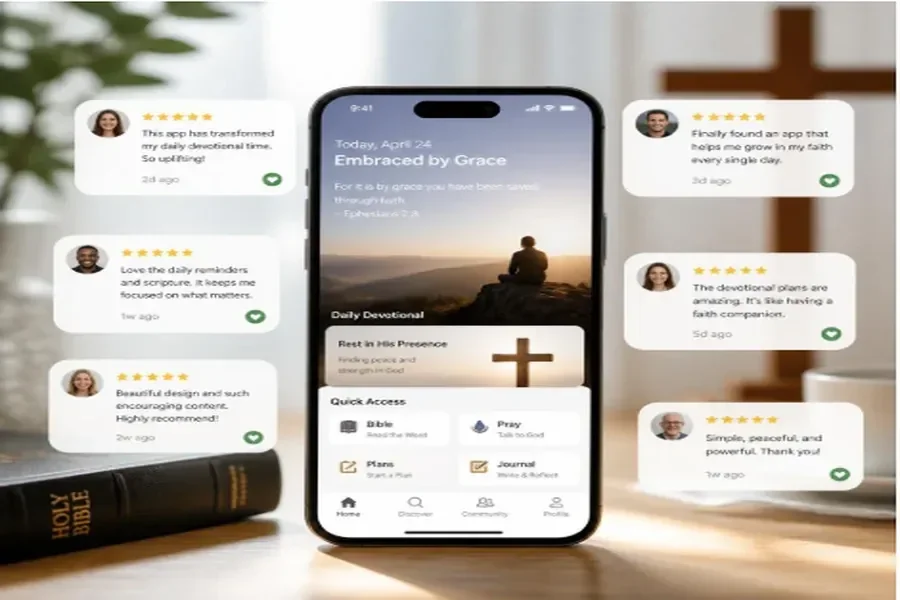
A friend named Dana held her phone out across a coffee shop table and explained that she had downloaded three devotional apps in a week and every one had a 4.8 rating or higher. The first was so packed with ads she could not get through a single reading, the second had a daily word that sounded more like a horoscope than the Bible, and the third charged her a large fee after a free trial she had forgotten about. She noted that people in the reviews said these apps changed their lives.
Many People Now Pray Read and Study Through
Many people now pray, read, and study through their phones, and christian app reviews are usually the first thing checked before letting a new voice into quiet time. Are they actually telling the truth? Sometimes, but not always, and telling the difference takes more effort than glancing at the stars.
There is a quiet assumption that a faith app reviews must be more trustworthy since the people writing them are probably believers. However, the app store does not care what is on the icon, and the same pressures shape ratings on a Bible app as on any other software. Most apps ask for a rating at a carefully chosen moment, such as when a user finishes a thirty-day streak and confetti pops on the screen. Tapping five stars in that moment of feeling great is a snapshot of one happy minute rather than a verdict on whether the app helped spiritual growth.
On the other end, a surprising number of one-star reviews come down to login issues or costs. These are fair frustrations, but they do not reveal anything about the content. Proverbs 14:15 notes that the simple believe anything while the prudent give thought to their steps.
Reading reviews with healthy skepticism starts with skipping to the three-star reviews. People who leave three stars almost always explain themselves by sharing both the positive aspects, like liking the audio teachings, and the negatives, like hating the notifications. Proverbs 18:17 notes that in a lawsuit the first to speak seems right until someone comes forward and cross-examines, and middle reviews serve as that cross-examination.
It Is Also Important to Watch Out
It is also important to watch out for empty praise. A glowing review that lacks detail is useless when trying to make a decision, so look for reviews that name something real like a particular book summary or a meditation that helped through a hard season. If a batch of reviews sound weirdly alike with the same phrases and exclamation points posted the same week, remain suspicious.
Sorting by most recent is another helpful strategy because apps change. An app that was lovely a few years ago might have been sold, redesigned, or stuffed with upsells since launch, so scrolling through what people are saying currently matters more.
This leads to a question no star rating can answer. A bad recipe app wastes an evening, but an app with poor theology can slowly bend how someone thinks about God without them noticing for months. The Bereans in Acts 17:11 examined the Scriptures every day to see if what Paul said was true, and if they checked an apostle, people can certainly check an app.