
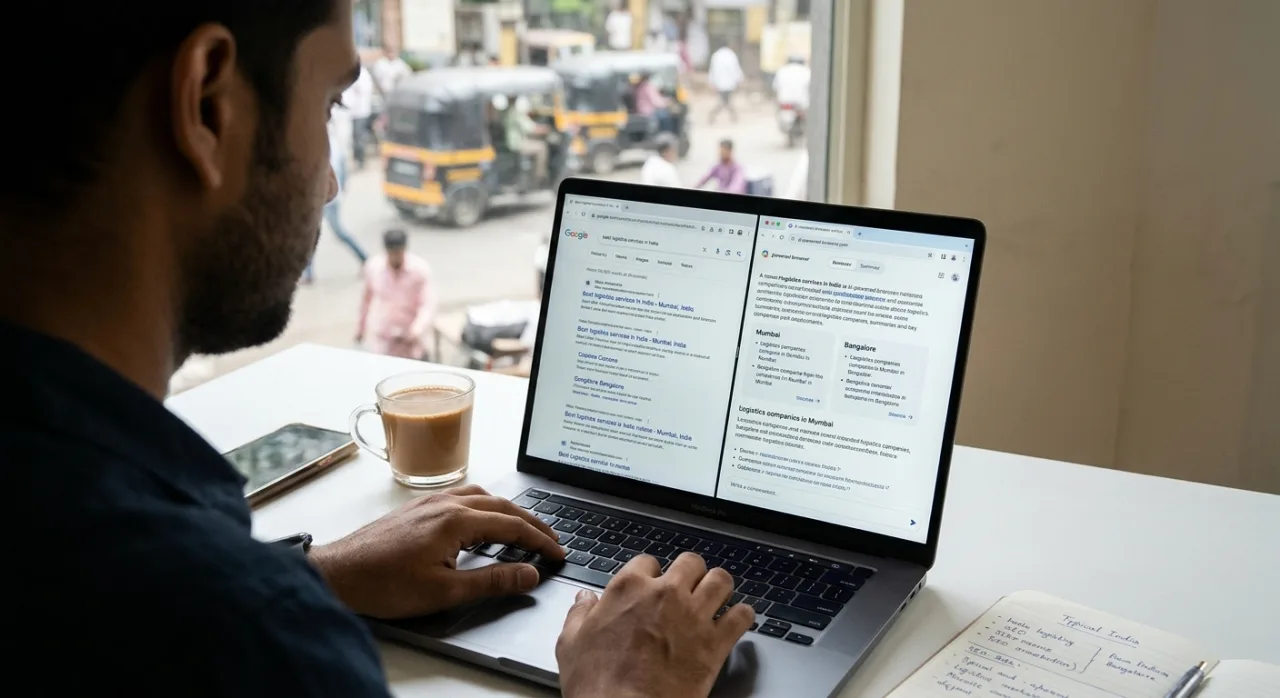
 For years, businesses across India have treated web browsers as simple portals to Google: users enter a search query, skim the results page, and pick a website. Today, AI-powered browsers are starting to reshape that familiar habit by summarizing complex information and executing tasks directly within the interface. While this shift changes how audiences discover brands, it does not render Google SEO obsolete. Instead, it redefines what a high-performing digital presence must accomplish.
With emerging options like ChatGPT Atlas and Comet competing for attention, many wonder if AI assistants will replace classic web browsing. Examining whether these platforms can truly challenge Chrome’s dominance helps answer the core question: Will Indian consumers still explore the open web when an assistant provides instant answers?
Why Browsers Are Adding AI Features
A traditional browser displays web pages and provides simple tools to navigate between them. An AI-enabled browser adds an interactive assistant layer, allowing users to compare products, request direct summaries, or analyze lengthy documents without opening dozens of tabs.
However, instant summaries do not automatically make AI browsers a complete substitute for search engines. Users still rely on primary sources for detailed multi-step research, real-time pricing, local service availability, and high-stakes decisions where factual precision matters. Because AI models rely on public web data, concise summaries often miss critical context, nuance, or localized specifics present in original articles.
Chrome Maintains a Strong Defense
Google Chrome’s dominant market share relies on deeply ingrained habits, broad cross-device synchronization, saved credentials, and seamless integration with the Google ecosystem. In India’s diverse digital landscape where users frequently move between Android smartphones, budget laptops, and shared devices performance, familiarity, and data efficiency matter as much as novel AI capabilities.
Switching browsers requires migrating settings, extensions, and workflows. To win over users permanently, AI competitors must deliver consistent value without slowing down routine tasks, draining mobile battery, or overcomplicating simple web navigation.
What Changes for Google SEO in India?
When an AI browser provides an immediate answer on screen, baseline informational traffic for quick definitions will likely decline. However, businesses offering expert opinions, specialized services, detailed product comparisons, or localized operations can still gain significant visibility.
While total site visits may drop, overall visitor intent and conversion rates often improve, as users clicking through from an AI summary are usually closer to making a purchase decision.
Essential On-Page Adjustments
-
Direct Answers First: Answer core questions near the top of the page using clear language before expanding into detailed analysis.
-
Structured Information Architecture: Use clean subheadings and bullet points to make content easy for both humans and AI models to process.
-
Technical Performance Basics: Optimize for mobile speed, secure HTTPS connections, clear metadata, and schema markup.
-
Localized Context: Detail specific Indian cities served, regional language support, local payment options like UPI, and exact delivery terms.
Earning Trust Beyond the Search Result
AI-generated snippets often leave readers questioning the original source or applicability of a claim. Brands can establish trust and stand out in both traditional search results and AI overviews by prioritizing explicit expertise and transparency.
To build digital authoritiveness, ensure your content highlights clear author qualifications that demonstrate real-world experience, provides a transparent methodology detailing how information and data were gathered, and offers first-party insights through proprietary data and real case studies.
To reinforce this trust, visual presentation must match content quality. Inconsistent branding or subpar graphics can discourage visitors once they land on a page. Businesses needing professional design assistance can leverage trusted freelance marketplaces like Osdire to hire vetted graphic designers for brand identity packages, ad creatives, and custom web visuals. Investing in cohesive design ensures that once searchers arrive, the visual experience reflects the authority of your written content.
Measure Outcomes, Not Just Keyword Rankings
As browsing behaviors evolve, relying solely on raw session counts can obscure actual performance. An article might inform an AI assistant’s response without receiving a direct click, while the traffic that does arrive is far more qualified.
-
Organic Impressions: Measures brand presence and reach in both traditional search engine results pages and AI-generated overviews.
-
Qualified Site Visits: Captures higher-intent users seeking deep analysis, leading to more engaged on-site behavior.
-
Conversion Actions: Tracks actual leads, sales, and newsletter signups as the ultimate measure of content success.
Rather than drastically altering core SEO strategies for every new browser feature, focus on creating fast-loading, highly informative content that serves real user needs. Companies that consistently publish accurate, well-structured, and authoritative content will remain easy to find, index, and cite across both Google Search and next-generation AI platforms.
Leave a Reply